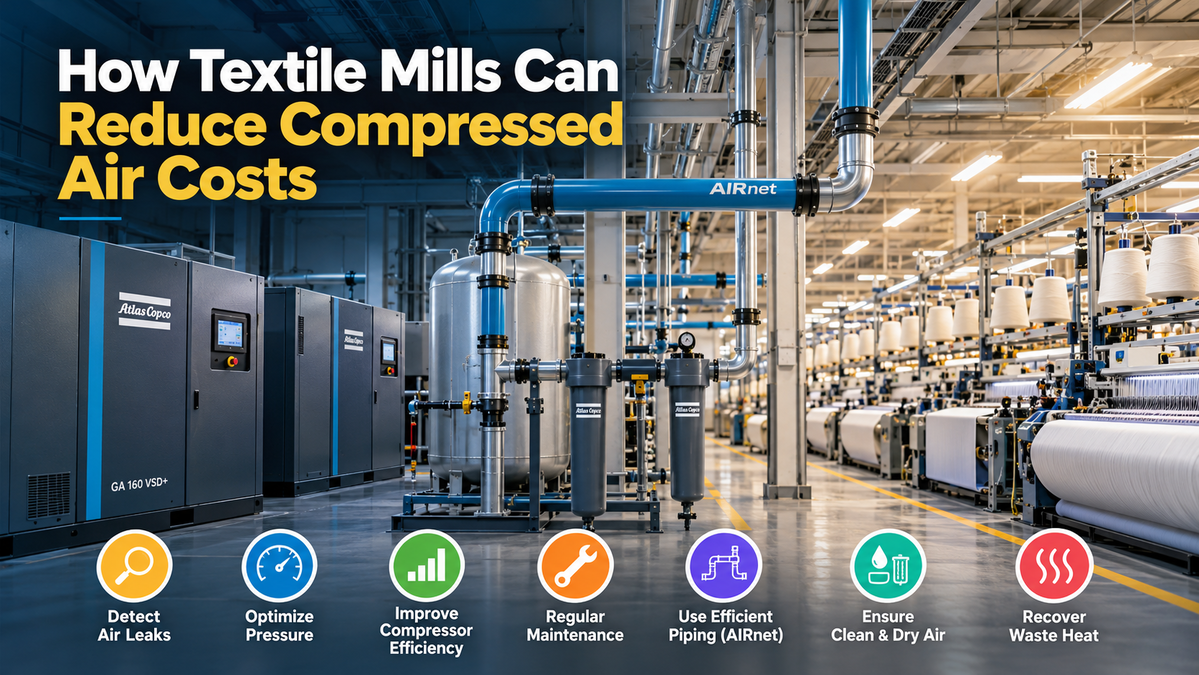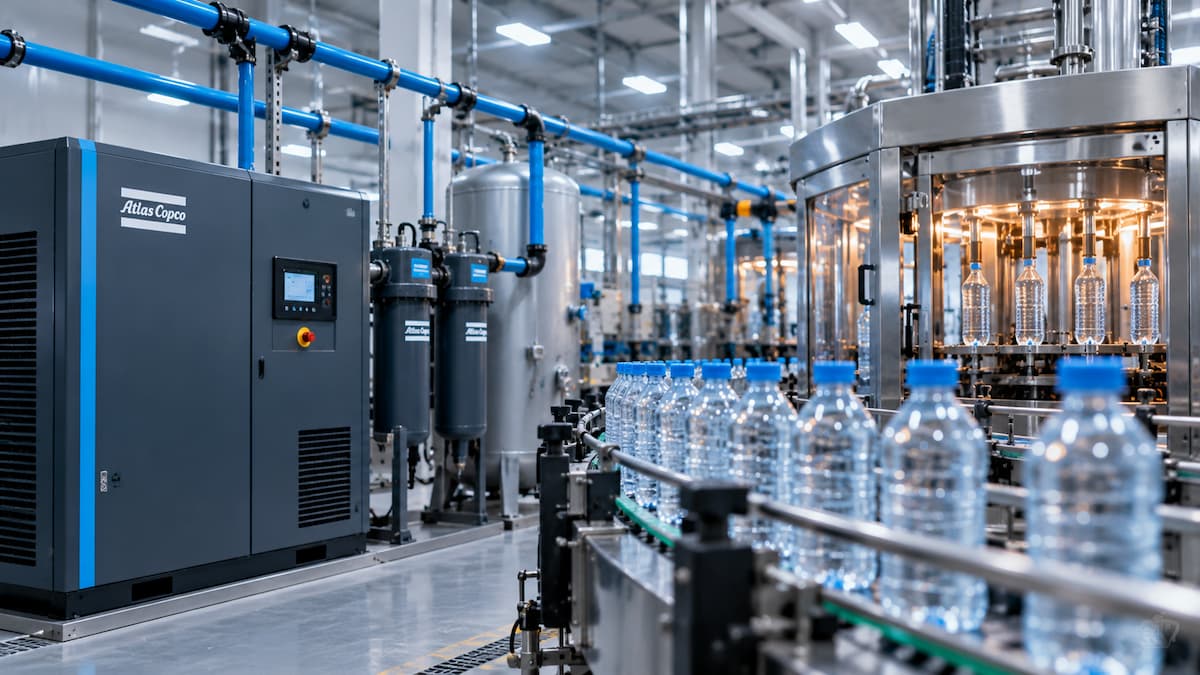
Every pharma plant manager knows the tension. Compressed air touches tablets, capsules, packaging and sometimes the product itself, so purity is not negotiable. But compressed air is also one of the most expensive utilities on site, and most plants pay far more for it than they need to.
The good news is that cost and purity are not opposites. The savings usually come from how the system is run, not from lowering the quality of the air.
Where the money actually goes
Over a compressor's life, the purchase price is a small slice. Electricity is the bulk of it, often more than three quarters of total ownership cost. In a plant that runs round the clock, that makes energy the number to attack.
Three problems show up again and again in pharma facilities:
- Compressors running unloaded. A fixed speed machine that idles between demand peaks still draws a large share of its full power while delivering no air.
- Pressure set higher than needed. A common rule of thumb is that every extra bar costs roughly 7% more energy. Many plants run at 8 bar because one old machine once needed it.
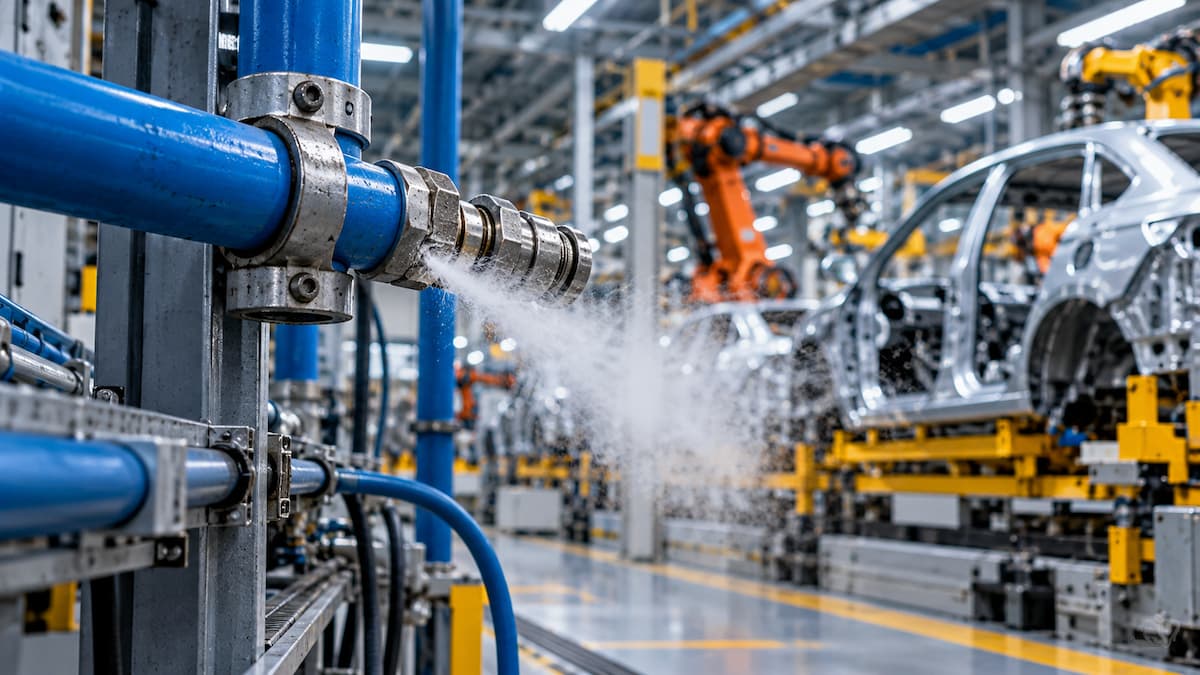
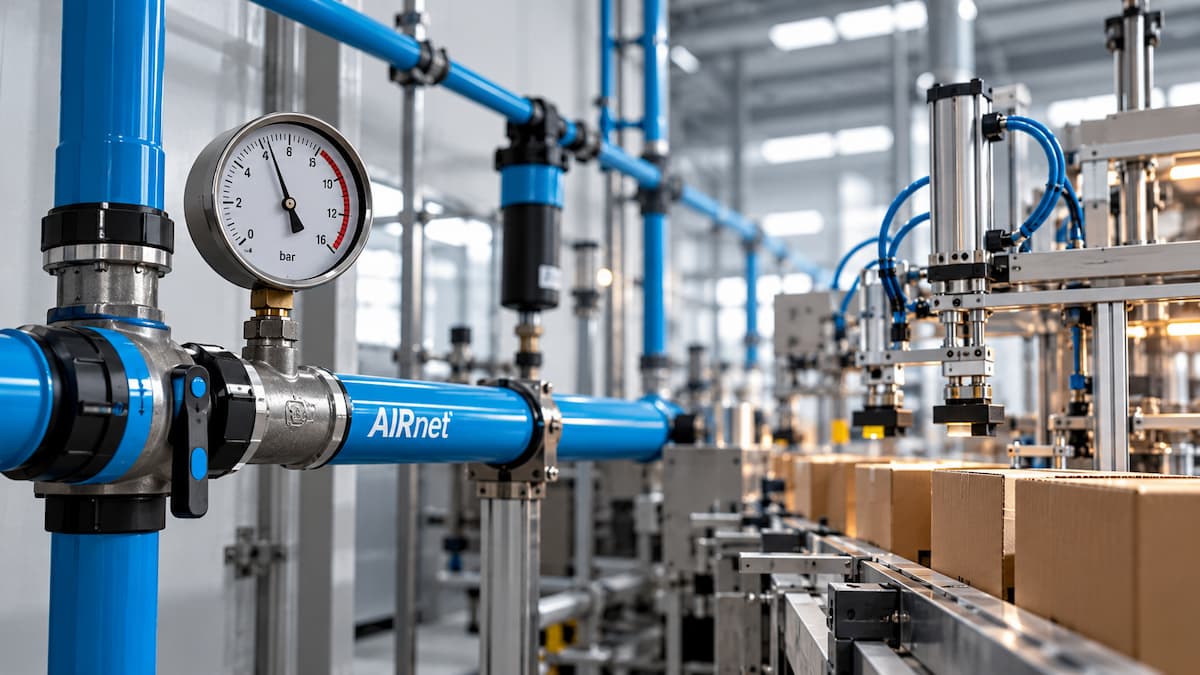
- Leaks. Cleanroom utilities are often well maintained, but the compressed air lines behind them are not always checked as carefully.
Keep purity, change the machine
Pharma applications generally call for oil free air, and ISO 8573-1 Class 0 is the usual benchmark for oil content. Oil free compressors have a reputation for being power hungry, but modern designs have closed much of that gap.
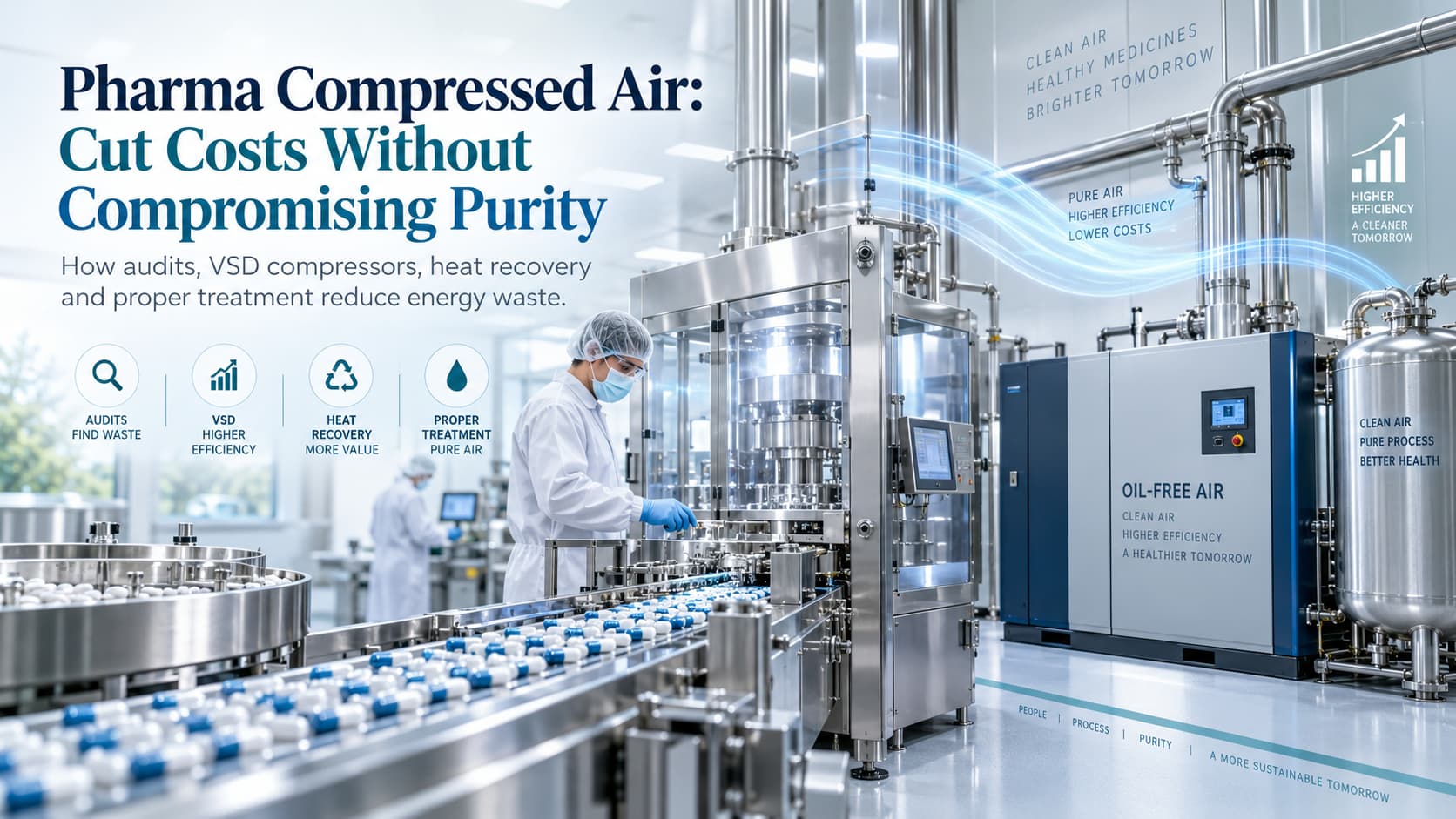
The biggest single lever is a variable speed drive (VSD). Pharma demand swings with batches, shifts and cleaning cycles. A VSD compressor matches its motor speed to the air actually being used, so it stops wasting energy at partial load. For plants with fluctuating demand, savings in the range of 20 to 35% against fixed speed units are commonly seen, though the real figure depends on your load profile.
Recover the heat you are already paying for
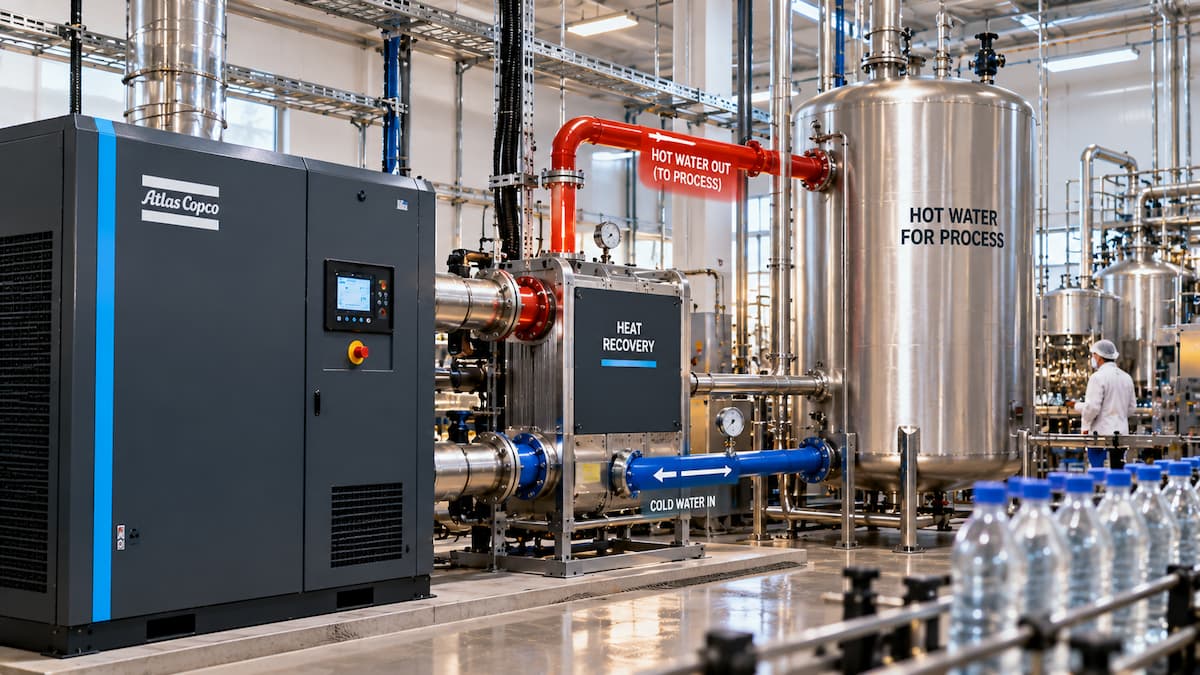
A compressor turns almost all of its electrical input into heat. In a water cooled oil free machine, a large part of that heat can be captured as hot water. Pharma sites need hot water constantly, for cleaning, CIP skids, boiler pre-heat and process use. Energy recovery turns a waste stream into a free utility and can pay back quickly.
Do not forget treatment
Oil free compression does not mean dry air. Moisture is a bigger threat to pharma lines than most people think, because wet air carries microbial risk and corrodes distribution pipes. Match the dryer and filters to the dew point your process needs, and check differential pressure across filters. Clogged filters quietly add to the energy bill.
A practical starting plan
- Measure actual air demand with a flow and power audit over at least a week.
- Fix leaks and lower the set pressure to the real requirement.
- Replace or supplement fixed speed units with VSD capacity.
- Check whether heat recovery suits your hot water demand.
- Review dryer and filter condition against your required purity class.
Airkom Agencies runs compressed air energy audits for industrial plants and can map where your system loses money before you spend on new equipment. Contact the team to book an audit.