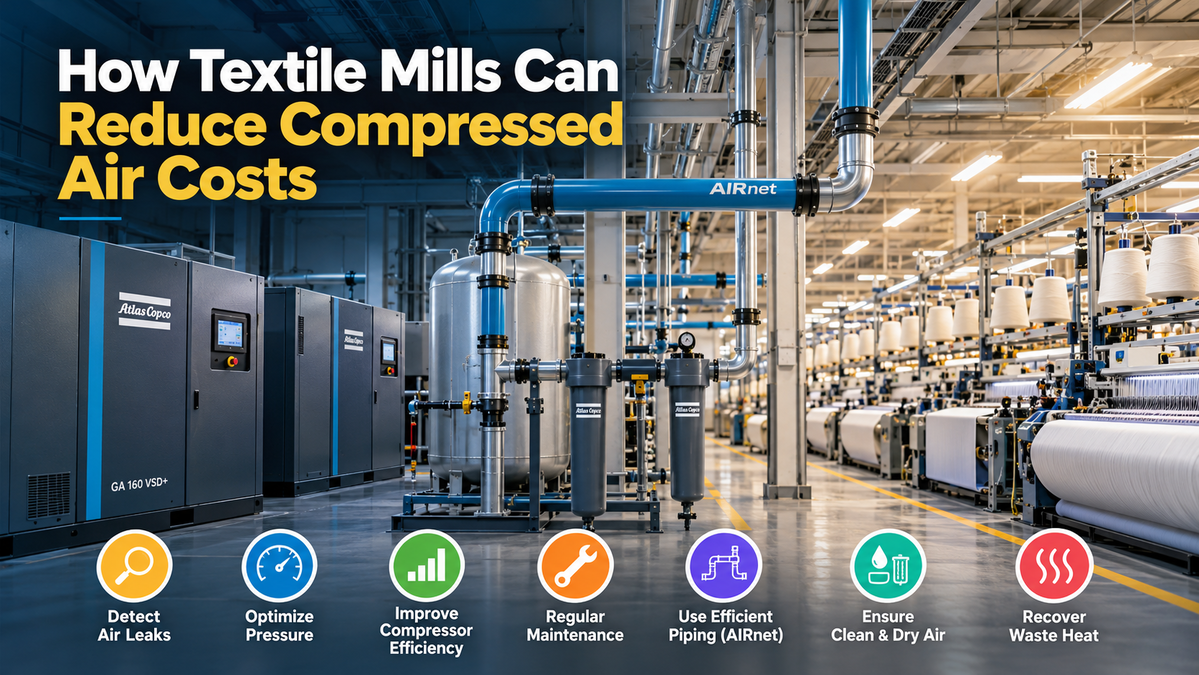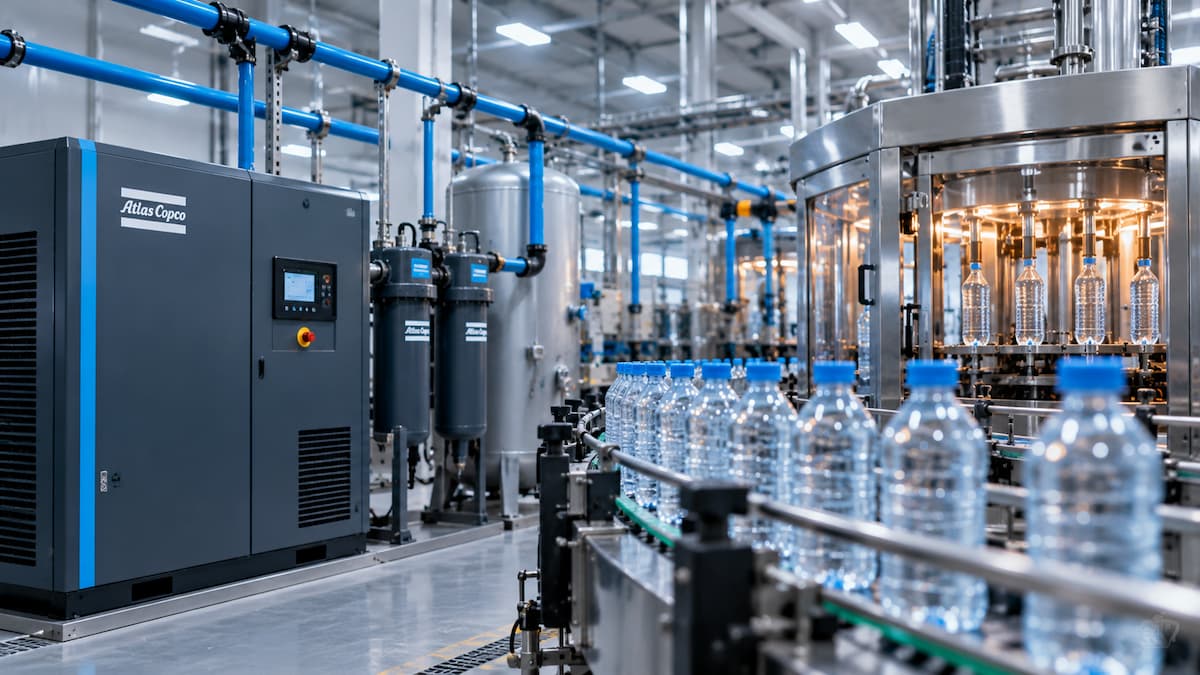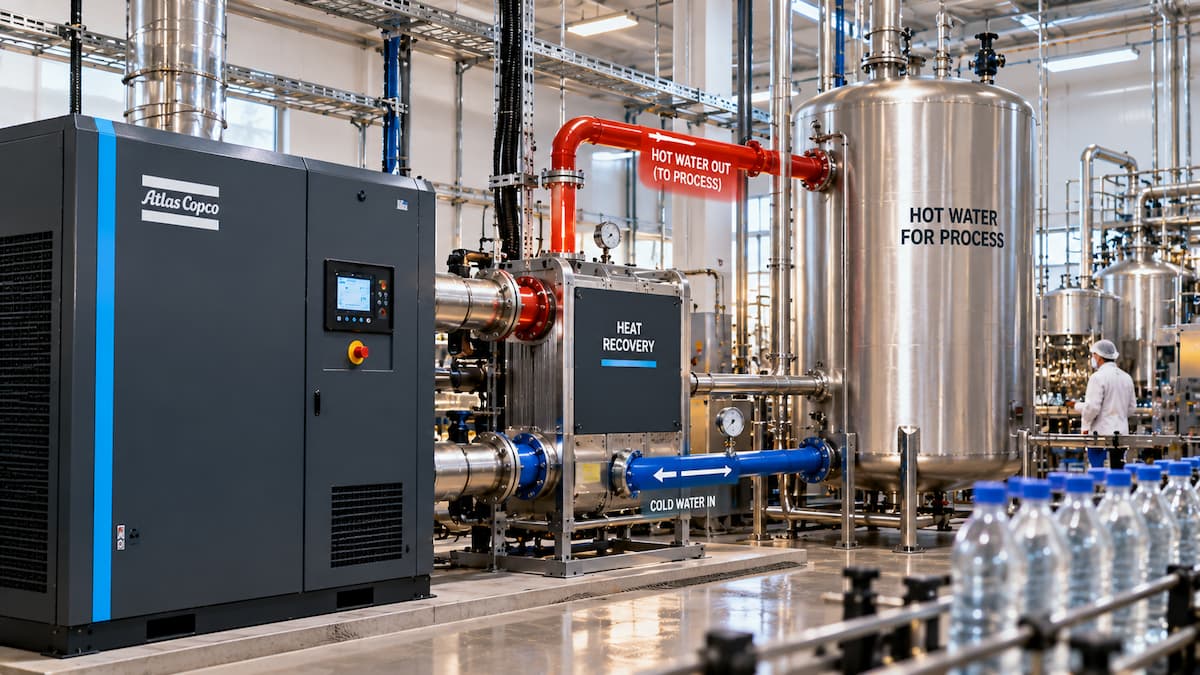
Here is a fact that surprises many plant owners: nearly all of the electricity an air compressor uses leaves the machine as heat. Only a small part ends up as stored energy in the compressed air. The rest is released through coolers into the compressor room or into cooling water, and in most plants it is simply thrown away.
Food and beverage plants are well placed to use that heat, because they need hot water all day.
How much heat is available
As a rule of thumb, up to around 90% of the electrical energy fed into a compressor can be recovered as useful heat. The exact share depends on the machine type and the recovery system fitted. Either way, it is a large amount. A compressor that draws 100 kW is releasing something close to 90 kW of heat, around the clock, if it runs continuously.
What the heat can do
Compressor heat is low to medium grade, so it suits jobs that use warm or hot water rather than steam:
- Pre-heating boiler feed water, so the boiler burns less fuel.
- CIP (clean in place) systems, which need large volumes of hot water.
- Washing and sanitation of equipment, crates and floors.
- Process heating, such as dairy pasteurisation pre-heat stages or bottle washing.
- Space heating of nearby areas in cooler regions.
Depending on the machine, recovered water temperatures typically range from around 60 to 90°C. Oil free water cooled machines can reach the upper end of that range.
Why this works so well in food and beverage
Dairies, breweries, juice plants, bakeries and packaged food units share two traits. They run compressors for long hours, and they have steady hot water demand. That combination is what makes heat recovery pay back. A compressor that only runs a few hours a day, in a plant that rarely needs hot water, is a poor candidate.
Another benefit is that cooler compressors run better. Taking heat out of the oil or cooling water lowers operating temperature, which can reduce stress on the machine.
How to check if it suits your plant
- List your hot water uses and note the temperature and daily volume of each.
- Check compressor running hours. Longer is better.
- Look at the physical layout. The compressor room should not be too far from where the hot water is used, since long insulated pipe runs add cost.
- Compare against the fuel you would save, whether that is coal, briquettes, furnace oil, gas or electric heating.
- Ask your supplier for a payback estimate based on measured numbers, not catalogue figures.
Many modern compressors can be supplied with an energy recovery option built in, and existing machines can sometimes be retrofitted. Before you commit, confirm the recoverable percentage and the water temperature for your specific model with the manufacturer.
Airkom Agencies can look at your compressor load and hot water demand together and tell you what recovery could be worth. Get in touch for an assessment.