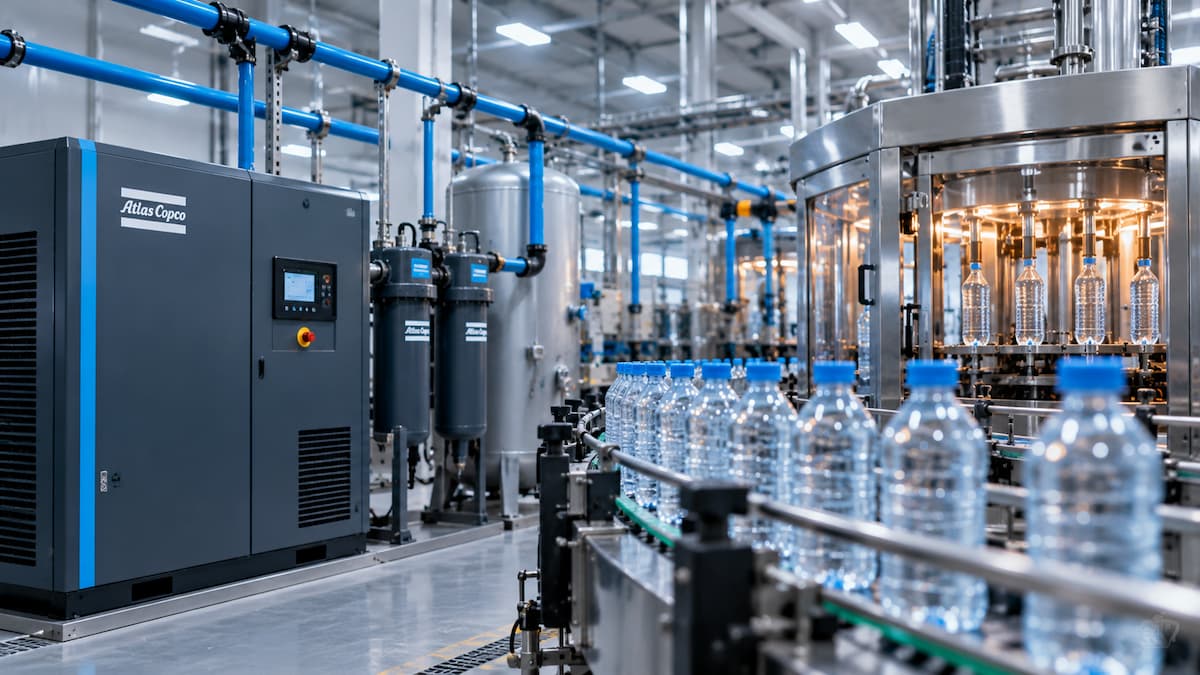
A PET bottling line does not forgive a compressor stop. When the air goes, blow moulders stop, the line backs up, filled products wait and labour sits idle. Even a short outage can cost more than a full year of preventive maintenance.
Most compressor downtime is not random. It follows patterns, and the patterns are well known.
Why PET Lines Depend on Air So Heavily
Preforms are stretched and blown into bottles with high-pressure air, and that air also drives valves, conveyors, cappers and fillers. Because the air may contact or be near food-grade packaging, quality matters as much as quantity. Bottlers typically require clean, dry and appropriately treated air for the blow moulding stage.
The Five Common Causes of Downtime
1. Moisture in the system. Wet air can corrode pipes and valves, damage cylinders and cause sticky, unreliable machine actions. It can also raise contamination concerns around food-grade packaging. A correctly sized compressed air dryer, with working drains, is basic protection.
2. Oil carryover. Oil that reaches blow moulding equipment can foul moulds and affect bottle quality. Compressed air filters need to match the required air purity and be changed on schedule.
3. Overheating. Dusty, hot compressor rooms are a common problem, especially during Indian summers. Blocked coolers and poor ventilation can cause high-temperature trips, often at the worst moment.
4. Neglected service intervals. Oil, separator and filter changes get postponed until after an urgent order. Parts can then deteriorate or fail under load.
5. Non-genuine or incorrect spare parts. A cheaper filter or separator may fit but not perform as required. The result can be higher pressure drop, poor separation and earlier failure.
Build a Plan, Not a Reaction
The aim is to replace avoidable breakdowns with scheduled maintenance:
- Follow service intervals by running hours: Use the manufacturer's recommended maintenance schedule rather than calendar convenience.
- Monitor temperature, pressure and filter differential: Track changes so potential issues can be investigated before a shutdown.
- Keep critical spares available: Stock essential filters, separator elements and suitable drain components.
- Check drains and dryer performance: Include them in routine inspections.
- Clean coolers and check ventilation: Prepare the compressor room before hot weather.
- Use a service contract: Schedule and document maintenance with trained technicians.
Remote monitoring can also help. Connected systems may flag rising temperatures, abnormal operating conditions or upcoming service requirements before production is affected.
The Cost Comparison
A planned maintenance contract offers more predictable costs. An emergency breakdown can bring lost production time, urgent parts delivery and an engineer called in at short notice. For plants running multiple shifts, preventive maintenance can help avoid costly stoppages and make maintenance spending easier to plan.
How Airkom Agencies Can Help
Airkom Agencies provides service plans, genuine Atlas Copco parts and trained technicians for plants across Mumbai and Gujarat. Regular maintenance and timely replacement of service components can help reduce avoidable downtime and support reliable compressed air performance.
If your compressor room only gets attention when something stops, it is time to change that.