A packaging line is a long chain of pneumatic parts: cylinders that push, grippers that hold, sealers that clamp, valves that fire in milliseconds. When air pressure at the machine is lower than at the compressor, the whole line feels it. Seals come out weak, cycle times stretch and operators start asking for "just a bit more pressure" from the compressor room.
That last step is the expensive mistake. Raising the compressor pressure to cover for a distribution problem burns more power and makes leaks worse, while the real fault stays in place.
What pressure drop really is
Pressure drop is the gap between the pressure your compressor delivers and the pressure your machine actually receives. Some loss is normal. Air rubbing against pipe walls, passing through filters and dryers, and going through bends all cost a little pressure. Trouble starts when the total loss grows beyond a few tenths of a bar.
The usual culprits
Undersized or corroded piping. Many plants added machines over the years and extended the same pipe. Small diameter pipe, long runs and dead ends all raise losses. Old galvanised iron pipe also rusts inside, and the scale narrows the bore and sheds particles into your equipment.
Clogged filters. A filter element collects dirt over time and the pressure drop across it climbs. Elements left in past their service life can cost far more in electricity than a new element does.
Too many fittings. Elbows, quick couplers, hoses and manual valves each add resistance. A tangle of flexible hose at the machine end is a common hidden loss.
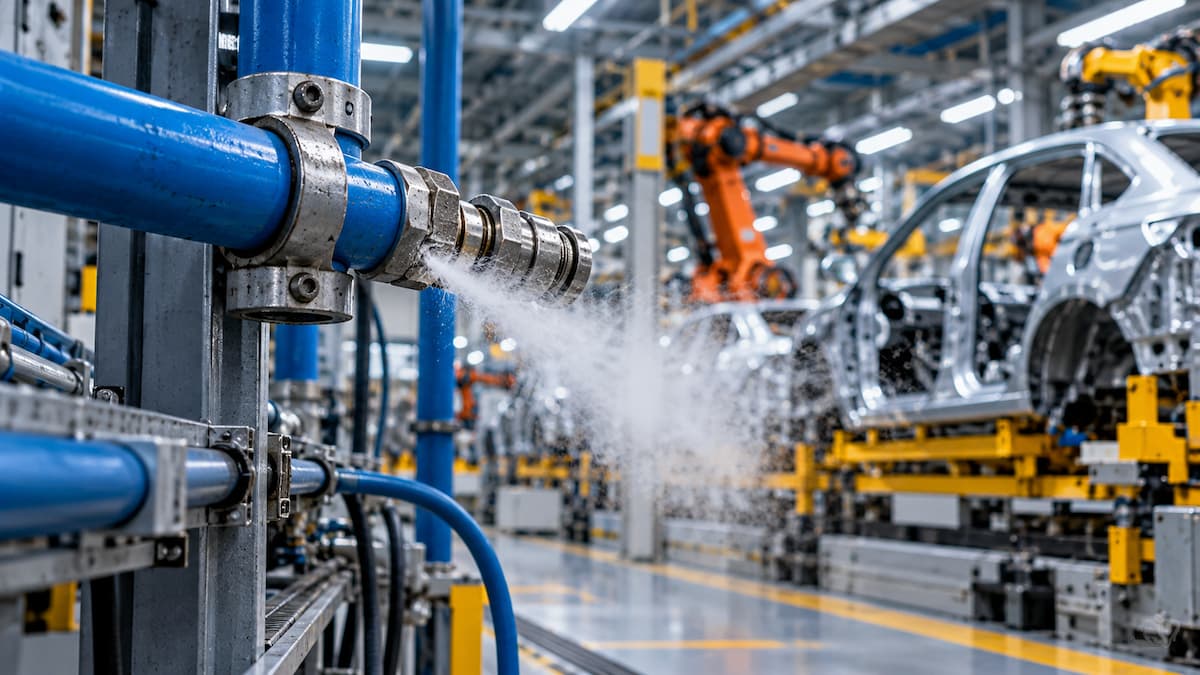
Leaks. Leaks lower pressure across the network, especially at the far end of the line.
Poor layout. A single long branch feeding many machines will always starve the last one. A ring main distributes air from two directions and holds pressure steadier.
How to find the problem
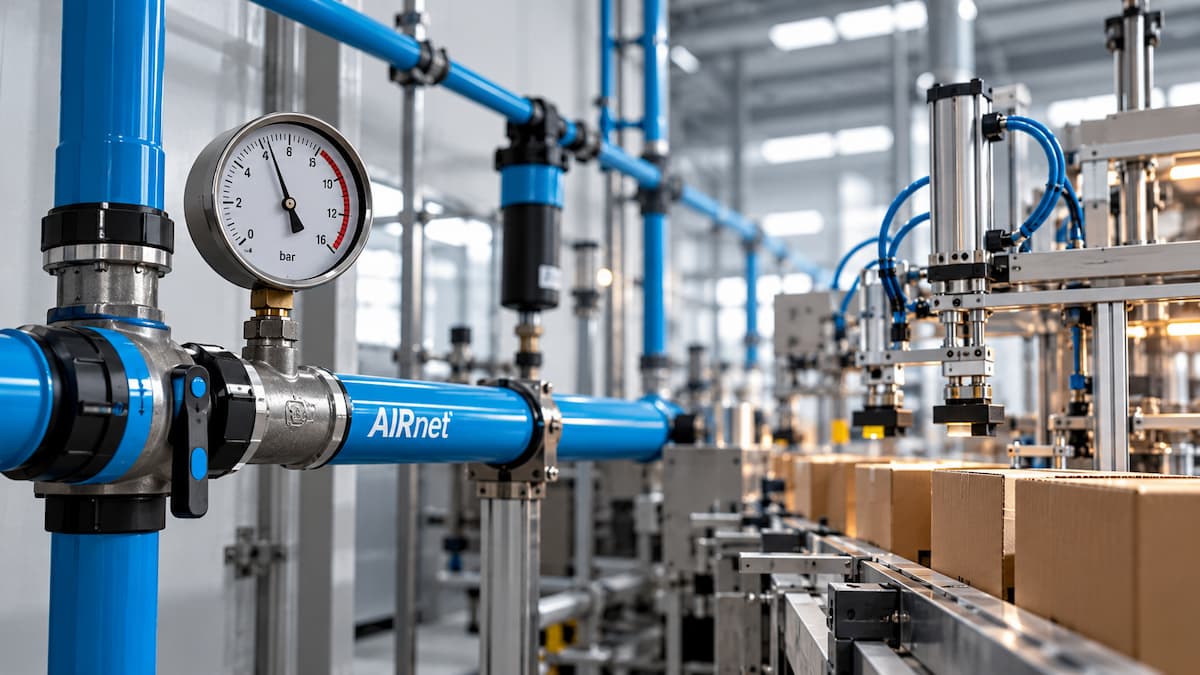
Fit pressure gauges at the compressor outlet, after the dryer and filters, at the start of each branch, and at the furthest machine. Log readings during peak production, not at idle. The gauge where the pressure falls fastest tells you where to look.
The fixes, in order of cost
- Replace filter elements on schedule and track differential pressure.
- Repair leaks, starting with the loudest.
- Shorten and simplify hose runs and remove unnecessary fittings.
- Add a receiver near high-demand machines to cover short bursts.
- Upgrade the main line to a properly sized loop in corrosion-free material.
Modern aluminium piping systems like AIRnet are built for this job. They are smooth bore, do not corrode, and have leak-tight connections, which keeps both pressure and air quality stable.
If your line is slowing down and the answer so far has been to raise the setpoint, it is worth measuring first. Airkom Agencies can audit your distribution network and show where the pressure is going. Talk to our team.