Short answer: To choose the right air compressor for replacement, first determine your required air flow, pressure, air quality, operating hours, and demand pattern. Then compare compressor type, size, technology, energy efficiency, maintenance requirements, installation conditions, and total cost of ownership. A compressed air audit can also help you understand your existing system before selecting a replacement.
Replacing an air compressor is a major decision for an industrial facility. Choosing a machine based only on its purchase price or the capacity of the existing compressor can lead to higher operating costs or performance problems.
The new compressor should match the facility's actual compressed air demand. It should also provide the required pressure and air quality while operating efficiently under normal production conditions.
A proper replacement plan should therefore look beyond the compressor itself. The air treatment equipment, storage, controls, distribution system, and future production requirements can all affect the performance of the complete compressed air system.
What to Consider When Replacing an Air Compressor
Before selecting a replacement compressor, evaluate the following factors:
-
Required air flow
-
Required operating pressure
-
Air quality
-
Current and future air demand
-
Operating hours
-
Demand fluctuations
-
Compressor type
-
Compressor size
-
Fixed speed or variable speed technology
-
Air treatment requirements
-
Installation conditions
-
Energy consumption
-
Maintenance requirements
-
Parts and service availability
-
Total cost of ownership
Understanding these requirements first can help you avoid selecting a compressor that is too large, too small, or unsuitable for the application.
1. Determine Your Compressed Air Demand
The first step in choosing a replacement air compressor is understanding how much compressed air your facility actually needs.
Air demand can change throughout the day. Some production processes may require compressed air continuously, while others may use it only at certain times.
Before selecting a compressor, determine:
-
Average air demand
-
Peak air demand
-
Minimum air demand
-
Required air flow
-
Required operating pressure
-
Daily operating hours
-
Weekly operating schedule
-
Future changes in production
A compressor should be selected based on measured or carefully calculated demand rather than simply replacing an old compressor with a machine of the same size.
For example, if the existing compressor was installed when production was smaller, its capacity may no longer be appropriate. The opposite can also happen. A facility may have installed a compressor that is larger than its actual demand, resulting in inefficient operation.
Understanding the demand profile helps determine the appropriate compressor capacity and control technology.
2. Check Your Required Air Pressure
Pressure is another important factor when selecting an air compressor.
Different machines and production processes can require different operating pressures. The compressor must provide enough pressure for the application without operating at unnecessarily high pressure.
Operating at a higher pressure than required can increase energy consumption.
Before replacing the compressor, identify the pressure required by the equipment that uses compressed air. Then check pressure losses across the air treatment equipment and distribution network.
Do not assume that increasing compressor pressure will solve every low-pressure problem. Pressure drops can also result from undersized pipes, clogged filters, air leaks, poor system design, or insufficient storage.
A system assessment can help determine whether the compressor itself is responsible for the problem.
3. Understand the Air Quality Requirements
Not every application requires the same compressed air quality.
Some manufacturing processes can operate with standard industrial compressed air. Other applications may require cleaner or drier air.
Air quality requirements can depend on the industry and application. Food and beverage production, pharmaceutical manufacturing, electronics, painting, and other sensitive processes may have specific requirements.
Depending on the application, the system may require:
-
Filters
-
Air dryers
-
Oil-free compression
-
Moisture separation
-
Condensate management
-
Additional air treatment
Choosing the correct air quality at the beginning is important because adding equipment later can increase installation costs and may require changes to the system.
4. Choose the Correct Compressor Type
The right compressor type depends on the application and demand profile.
Piston Compressors
Piston compressors can be suitable for applications with relatively low air demand or intermittent operation.
They use pistons to compress air and are available in different configurations and capacities.
Rotary Screw Compressors
Rotary screw compressors are commonly used in industrial applications that require a continuous supply of compressed air.
They can be suitable for facilities with longer operating hours and higher air demand.
Oil-Free Compressors
Some applications require compressed air with strict oil contamination controls.
Oil-free compressor technology can be considered when the application requires a higher level of air purity.
The correct choice depends on the required air quality and the applicable industry or process requirements.
5. Decide Between Fixed Speed and Variable Speed
Your air demand pattern can help determine whether a fixed speed or variable speed compressor is appropriate.
A fixed speed compressor generally operates at a set motor speed. This can be suitable for applications with relatively stable air demand.
A variable speed drive compressor can adjust motor speed according to changing demand. This can make it useful for facilities where compressed air requirements fluctuate.
For example, a factory may experience high demand during one part of the production cycle and much lower demand during another.
Instead of selecting a variable speed compressor simply because it is newer technology, evaluate the actual demand profile first.
A demand analysis can show whether variable speed operation is likely to provide an efficiency benefit for the application.
6. Select the Correct Compressor Size
Compressor sizing is one of the most important parts of a replacement project.
An undersized compressor may struggle to meet demand. This can cause pressure problems and place additional demands on the equipment.
An oversized compressor can also create problems. If the compressor regularly operates below its optimal range, the facility may spend more energy than necessary.
The correct size should be based on actual compressed air demand, required pressure, operating schedule, and future requirements.
Avoid using the size of the old compressor as the only reference.
If possible, collect operating data from the existing system before selecting the replacement.
7. Consider Your Future Production Requirements
A replacement compressor may remain in service for many years, so future production requirements should be considered.
Ask:
-
Is production expected to increase?
-
Will new machinery require compressed air?
-
Will operating hours change?
-
Will another production line be added?
-
Will compressed air quality requirements change?
-
Will the facility need additional capacity?
Planning for future demand can help prevent the need for another major compressor upgrade shortly after installation.
However, adding excessive capacity for uncertain future growth can also increase the initial investment and operating costs.
The goal is to find a practical balance between current requirements and realistic future demand.
8. Compare Total Cost of Ownership
The purchase price should not be the only factor used to compare compressors.
The total cost of ownership includes the costs associated with purchasing, operating, maintaining, and eventually replacing the equipment.
These costs can include:
-
Initial purchase price
-
Installation
-
Electricity
-
Maintenance
-
Replacement parts
-
Repairs
-
Air treatment
-
Downtime
-
System upgrades
-
End-of-life costs
Energy consumption can represent a significant part of the lifetime cost of an industrial compressor.
This means that a compressor with a higher initial purchase price may have lower operating costs if it provides better efficiency under the facility's actual operating conditions.
A proper comparison should therefore consider the expected cost over the compressor's operating life.
9. Evaluate Energy Efficiency
Energy efficiency is especially important for compressors that operate for long periods.
Before choosing a replacement, compare the energy performance of the available options under conditions similar to your application.
Important factors include:
-
Air flow
-
Operating pressure
-
Motor efficiency
-
Load profile
-
Control method
-
Operating hours
-
Cooling system
-
Maintenance condition
Energy savings depend on the complete system. Installing a highly efficient compressor will not eliminate energy losses caused by major compressed air leaks or an inefficient distribution network.
For this reason, compressor efficiency should be evaluated together with the rest of the compressed air system.
10. Check the Compressor Room Conditions
The environment around the compressor can affect its performance and maintenance requirements.
The compressor should have suitable ventilation and enough space for operation and servicing.
The intake air should also be as clean as practical. Dust, fumes, moisture, and other contaminants can affect filters and compressor components.
Ambient temperature is another factor.
Higher inlet temperatures can affect compressor performance. The actual effect depends on the compressor design and operating conditions.
The compressor room should therefore provide suitable:
-
Ventilation
-
Temperature control
-
Air intake conditions
-
Drainage
-
Service access
-
Electrical supply
-
Cooling arrangements
These factors should be considered before installing a replacement compressor.
11. Look at Air Treatment Requirements
A compressor is only one part of a compressed air system.
Depending on the application, the system may require a dryer and filtration equipment.
An air dryer can help remove moisture from compressed air. Filters can help remove contaminants from the compressed air stream.
The required air treatment depends on the application and compressed air quality requirements.
Selecting the compressor and air treatment equipment together can help create a properly matched system.
Installing an air dryer or additional filtration later may require extra installation work and cost.
12. Reduce Pressure Losses
Pressure losses can occur throughout a compressed air system.
Potential causes include:
-
Long distribution lines
-
Undersized pipes
-
Dirty filters
-
Poor fittings
-
Valves
-
Air treatment equipment
-
Air leaks
If the pressure at the point of use is lower than expected, increasing compressor pressure is not always the best solution.
First identify where the pressure loss occurs.
Reducing unnecessary pressure can also help reduce energy consumption. The amount of potential savings depends on the compressor, system design, operating pressure, and demand.
A properly designed distribution system can help deliver the required pressure without forcing the compressor to operate at unnecessarily high pressure.
13. Check for Compressed Air Leaks
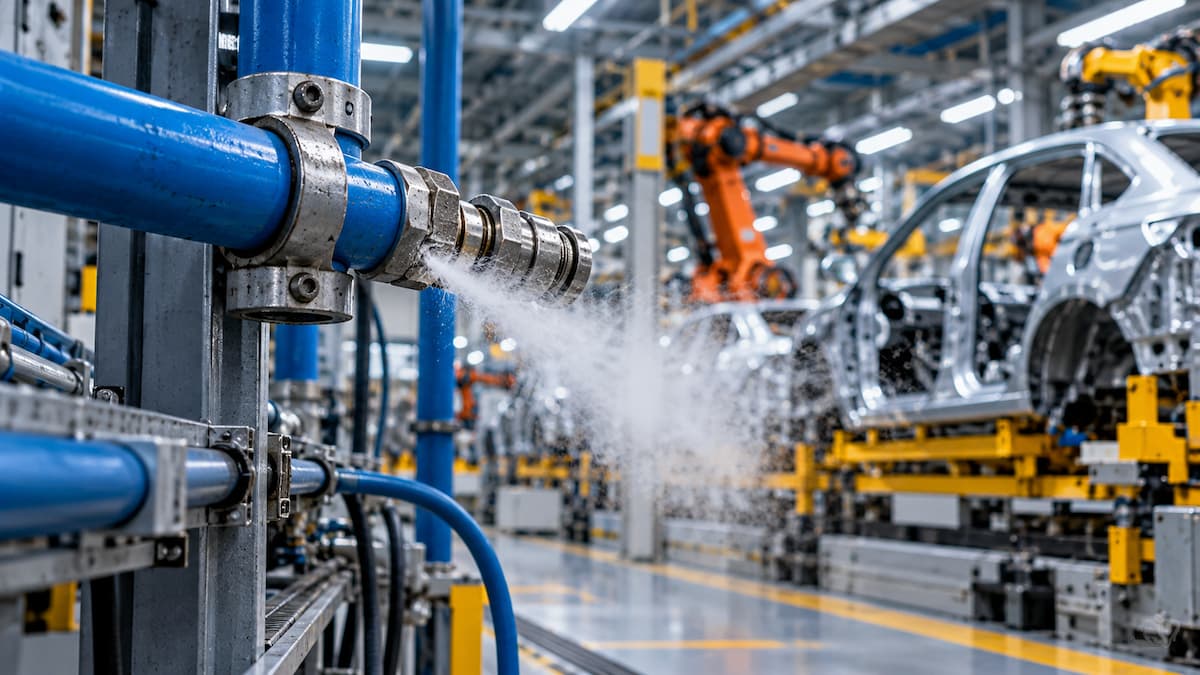
Air leaks are another issue to investigate before replacing an air compressor.
A compressor may be producing more air than the production equipment actually needs because part of the compressed air escapes through leaks.
Leaks can occur at:
-
Pipe joints
-
Hoses
-
Fittings
-
Valves
-
Couplings
-
Pneumatic equipment
-
Storage tanks
-
Connections
Fixing leaks can reduce unnecessary compressor operation and energy consumption.
This is important when sizing a replacement compressor. If significant leaks are present, using current demand data without correcting the system may lead to an inaccurate assessment of actual production requirements.
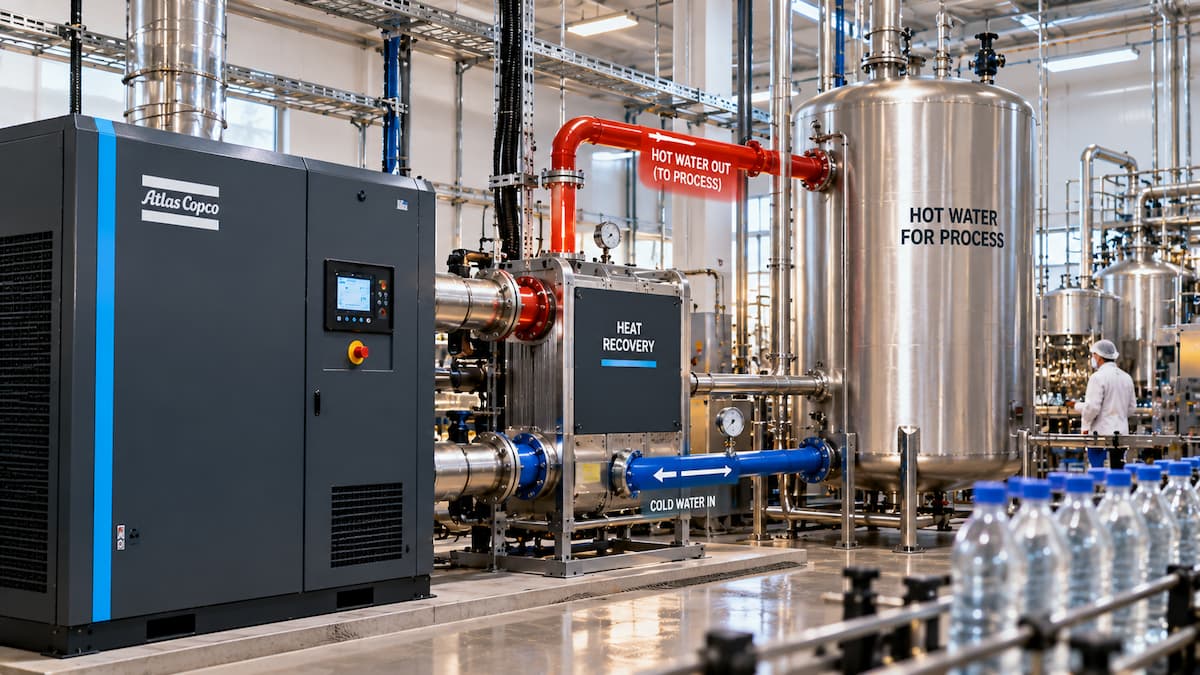
14. Consider Heat Recovery
Air compressors generate heat during operation.
Instead of allowing all of this heat to dissipate, some facilities may be able to recover and reuse a portion of it.
An energy recovery system can potentially use recovered heat for applications such as:
-
Water heating
-
Building heating
-
Process heating
-
Other suitable thermal requirements
The practical benefit depends on the compressor, operating conditions, heat demand, and system design.
Heat recovery should therefore be evaluated as part of the overall compressor replacement project rather than assumed to be suitable for every facility.
15. Consider Maintenance and Service Requirements
A replacement compressor should be evaluated for more than energy efficiency.
Consider how easy it will be to maintain and service the equipment throughout its operating life.
Review:
-
Maintenance intervals
-
Service requirements
-
Parts availability
-
Local technical support
-
Warranty
-
Monitoring options
-
Expected service life
-
Maintenance costs
Reliable access to service and replacement parts can be particularly important for facilities where compressed air is critical to production.
16. Consider Compressor Controls and Monitoring
Modern compressor systems can include controls and monitoring features that help operators understand system performance.
A central controller can coordinate multiple compressors and help match compressor operation with demand.
Monitoring technology can also provide information about:
-
Energy consumption
-
Operating hours
-
Pressure
-
Compressor status
-
Load patterns
-
Maintenance requirements
This information can help operators identify changes in system performance and respond to potential problems earlier.
For facilities operating multiple compressors, proper sequencing and control can be particularly important.
17. Do Not Ignore the Existing Distribution System
Replacing the compressor without evaluating the rest of the system can limit the benefits of the upgrade.
The distribution network should be checked for:
-
Air leaks
-
Pressure drops
-
Pipe sizing
-
Poor connections
-
Moisture
-
Corrosion
-
Unnecessary restrictions
The storage capacity should also be evaluated.
In some cases, improving the distribution system or reducing leaks may provide a significant improvement without requiring a larger compressor.
18. Use an Air Compressor Audit Before Replacement
If you do not have reliable information about your compressed air demand, consider conducting an energy or compressed air audit before choosing a replacement.
An audit can provide data about how the system operates under different production conditions.
It can help identify:
-
Actual air demand
-
Peak demand
-
Energy consumption
-
Pressure requirements
-
Load and unload patterns
-
Demand fluctuations
-
Air leaks
-
System inefficiencies
This information can make compressor selection more data-driven.
Atlas Copco iiTrak Audit
The Atlas Copco iiTrak audit can use data loggers to monitor compressor operation and compressed air demand.
Monitoring over several days can help capture changing demand conditions during normal plant operation. A 7 to 14 day monitoring period can provide data across different operating periods, depending on the facility's schedule.
The resulting information can help businesses understand their compressed air consumption and identify potential efficiency improvements.
It can also help determine whether the existing compressor should be maintained, overhauled, replaced, or supported with additional equipment.
Common Mistakes When Choosing a Replacement Compressor
Several mistakes can increase the cost of a compressor replacement.
Choosing Based Only on Purchase Price
The cheapest compressor to purchase may not have the lowest lifetime operating cost.
Consider energy, maintenance, service, and other ownership costs.
Replacing the Compressor With the Same Size
The old compressor may not have been correctly sized for the current system.
Measure current demand before selecting the replacement.
Choosing an Oversized Compressor
More capacity does not always mean better performance.
An oversized compressor can operate inefficiently when demand is low.
Ignoring Air Leaks
Leaks can make the system appear to require more compressor capacity than it actually does.
Check for leaks before finalizing the replacement size.
Ignoring Air Quality
The compressor should match the air quality requirements of the application.
Additional filtration or drying may be required.
Focusing Only on the Compressor
The complete compressed air system affects efficiency.
Evaluate storage, controls, dryers, filters, piping, and distribution.
Air Compressor Replacement Checklist
Before purchasing a replacement compressor, make sure you understand:
-
Required air flow
-
Required pressure
-
Air quality requirements
-
Current air demand
-
Peak air demand
-
Future production requirements
-
Operating hours
-
Demand fluctuations
-
Compressor type
-
Fixed speed or variable speed requirements
-
Compressor size
-
Dryer requirements
-
Filtration requirements
-
Compressor room conditions
-
Air leaks
-
Pressure losses
-
Energy consumption
-
Maintenance requirements
-
Parts availability
-
Service support
-
Total cost of ownership
Conclusion
Choosing the right air compressor for replacement requires more than selecting a machine with the same capacity as the existing unit.
Start by understanding your actual compressed air demand, pressure requirements, air quality, operating schedule, and future production needs. Then evaluate compressor type, size, control technology, energy efficiency, air treatment, maintenance, and total cost of ownership.
The complete compressed air system should also be considered. Air leaks, pressure losses, poor controls, inadequate storage, and unsuitable air treatment can affect performance even after a new compressor has been installed.
A compressed air audit can provide useful operating data before making a replacement decision. With accurate information about demand and system performance, businesses can select equipment that better matches their requirements and avoid unnecessary operating costs.
The right compressor is not simply the largest or cheapest option. It is the one that matches the facility's compressed air requirements while providing suitable efficiency, reliability, air quality, and long-term operating costs.