Atlas Copco air compressors are widely used in industrial applications because the company offers a broad range of compressor technologies, energy-efficient options, air treatment equipment, controls, monitoring solutions, and service support. For Indian manufacturers, the right Atlas Copco compressor depends on air demand, pressure, air quality, operating hours, and total cost of ownership.
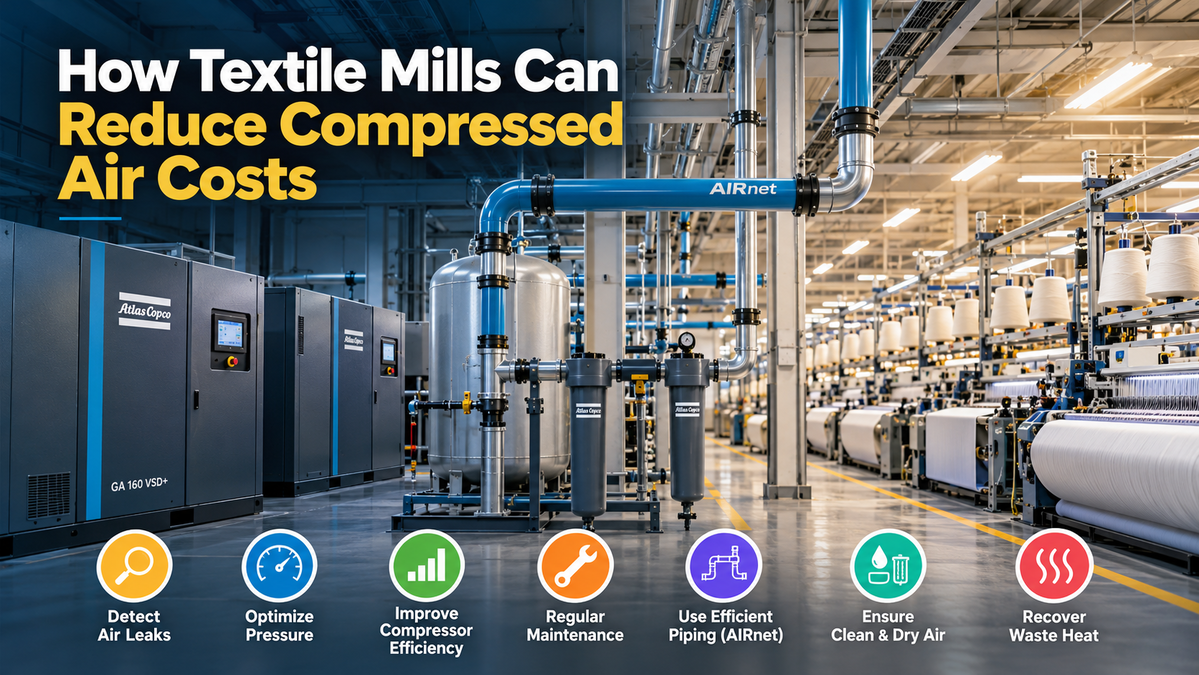
Compressed air plays an important role in many manufacturing processes. Automotive plants, pharmaceutical facilities, textile mills, food processing companies, engineering workshops, and other industries use compressed air for production equipment and automation.
Choosing the right compressor is therefore more than comparing the purchase prices of different machines. Manufacturers also need to consider energy consumption, reliability, maintenance, air quality, service support, and the ability of the compressor to match changing production demand.
Atlas Copco has developed compressor technologies for industrial applications for decades. Its history with screw compressors dates back to the 1950s. In 1954, Atlas Copco acquired rights to manufacture and sell screw compressors based on the Lysholm concept, and the company delivered its first compressor using the technology in 1955.
Today, Atlas Copco offers multiple types of industrial air compressors and related compressed air equipment in India.
Why Are Atlas Copco Air Compressors Used in Manufacturing?
There is no single reason why a manufacturer chooses one compressor brand over another.
The decision usually depends on the application and the complete cost of operating the equipment.
Atlas Copco's industrial compressor range includes oil-injected screw compressors, variable speed drive models, oil-free compressors, piston compressors, air dryers, filters, controllers, and other compressed air equipment.
Its India product range includes compressors for different capacity requirements, from smaller industrial machines to larger systems designed for demanding applications.
For a manufacturing facility, this broad range can make it possible to select equipment based on the plant's actual compressed air requirements rather than using the same type of compressor for every application.
Atlas Copco's Experience With Screw Compressor Technology
Rotary screw technology is widely used for applications that require a continuous supply of compressed air.
Atlas Copco's history with screw compressors goes back to the 1950s. The company acquired rights related to the Lysholm screw compressor concept in 1954 and delivered its first compressor using the technology in 1955. Atlas Copco later introduced oil-injected screw compressor technology in 1958.
This history is relevant because compressor design has a direct effect on efficiency, maintenance, and operating performance.
Modern screw compressors use two rotating screws to compress air. They are commonly used where facilities require continuous compressed air and longer operating periods.
Atlas Copco's current Indian range includes several rotary screw compressor series designed for different applications and capacity requirements.
However, a company's history should not be the only reason to select a compressor. The machine still needs to match the requirements of the individual facility.
Energy Efficiency Is a Major Consideration
Electricity can represent a significant portion of an industrial compressor's lifetime operating cost.
This makes energy efficiency an important factor when selecting a compressor for a manufacturing facility.
The amount of energy a compressor uses depends on several factors, including:
-
Air demand
-
Operating pressure
-
Running hours
-
Compressor technology
-
Load profile
-
Control system
-
Maintenance condition
-
Air leaks
-
Ambient conditions
A compressor that operates continuously under changing air demand may benefit from technology that can adjust output according to actual requirements.
This is where variable speed drive technology can become useful.
How Variable Speed Drive Compressors Work
A variable speed drive, or VSD, compressor can adjust motor speed according to changes in compressed air demand.
A fixed speed compressor generally operates at a set speed, while a VSD compressor can vary its motor speed within its operating range.
This can be useful for facilities where compressed air demand changes throughout the production cycle.
For example, a factory may require high compressed air flow during one production period and significantly less during another. Matching compressor output to demand can help avoid unnecessary energy use.
Atlas Copco's Indian range includes VSD compressors for different capacity requirements. Its current product information describes VSD technology as a way to adjust compressor operation according to air demand.
However, VSD is not automatically the best choice for every facility. The correct technology depends on the plant's demand profile.
A compressed air audit or demand analysis can help determine which compressor configuration is appropriate.
A Wide Range of Compressor Options
One advantage of having a broad compressor portfolio is that manufacturers can select equipment according to their application.
Atlas Copco's Indian compressor range includes:
Oil-Injected Screw Compressors
Oil-injected screw compressors are used in many general industrial applications.
They can be suitable for facilities that require a continuous supply of compressed air for manufacturing equipment, pneumatic tools, automation, and other processes.
Oil-Free Compressors
Some industries require compressed air with strict limits on oil contamination.
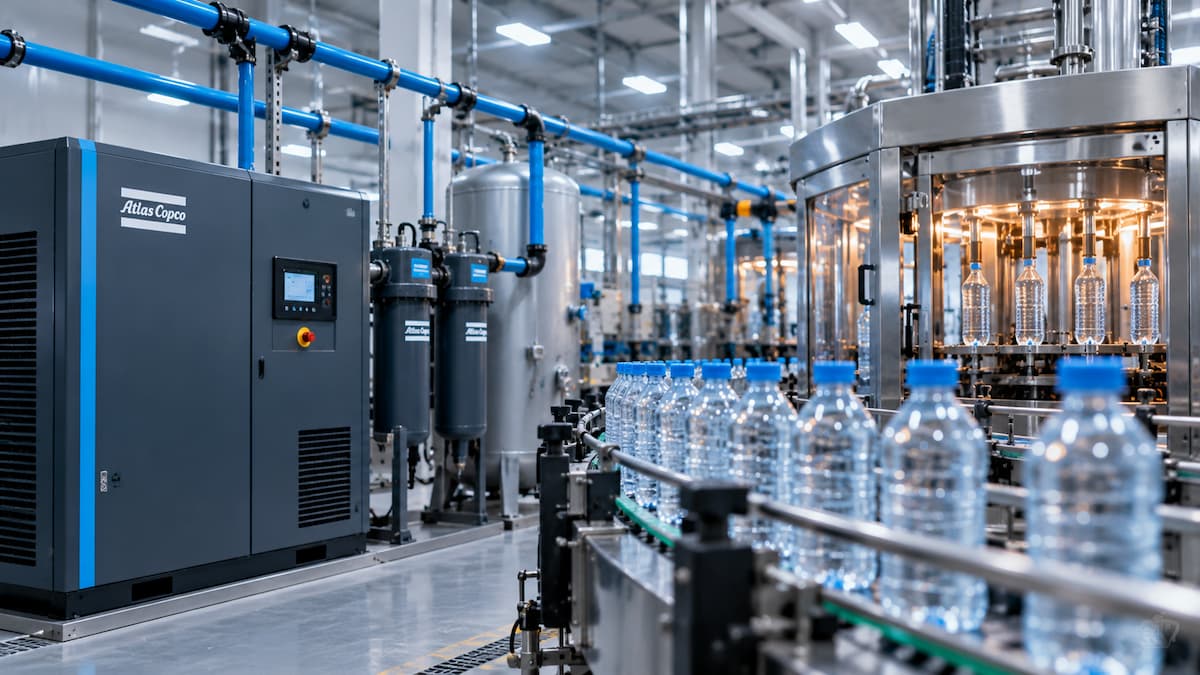
Food and beverage, pharmaceutical, electronics, and other sensitive applications may have specific compressed air quality requirements.
Oil-free compressor technology can be considered when the application requires oil-free air.
The required air quality should always be determined based on the production process and applicable standards.
Variable Speed Drive Compressors
VSD compressors can adjust motor speed according to changing air demand.
They can be particularly useful where demand fluctuates significantly.
Piston Compressors
Piston compressors can be suitable for certain applications with lower or intermittent compressed air demand.
The appropriate compressor type depends on the application's flow, pressure, duty cycle, and air quality requirements.
The Compressor Is Only One Part of the System
Buying a compressor is only one part of creating an efficient compressed air system.
A manufacturing facility may also need:
-
Air dryers
-
Filters
-
Air receivers
-
Central controllers
-
Condensate management
-
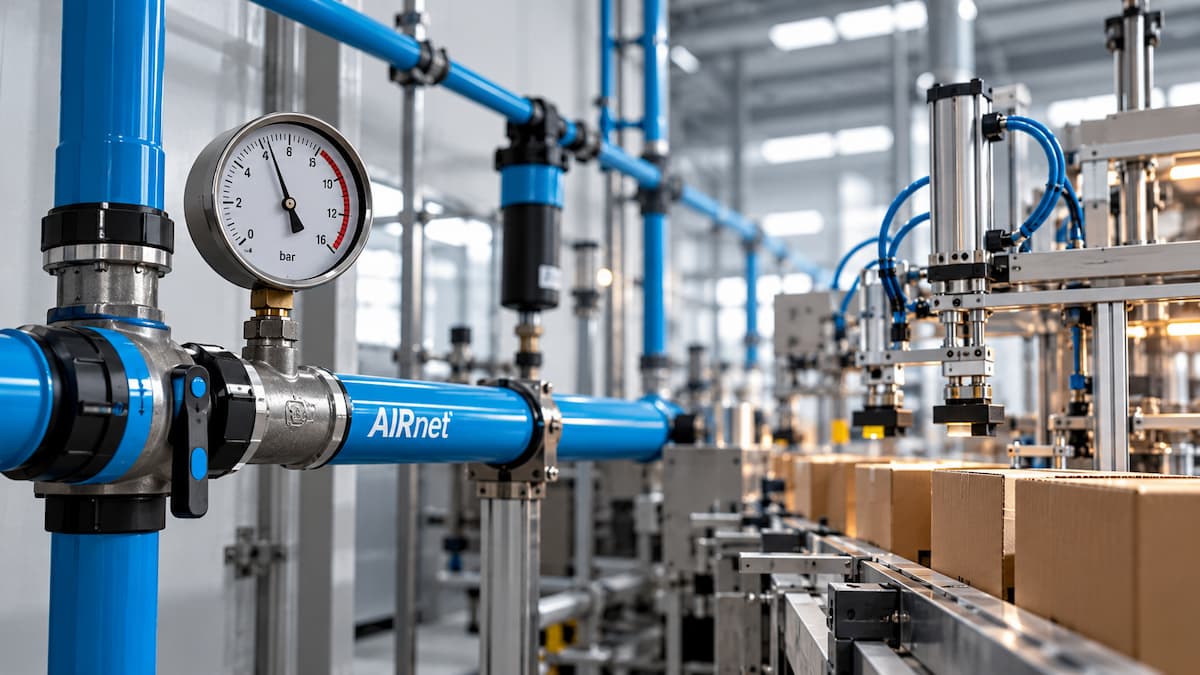
Distribution piping
-
Leak detection
-
Monitoring systems
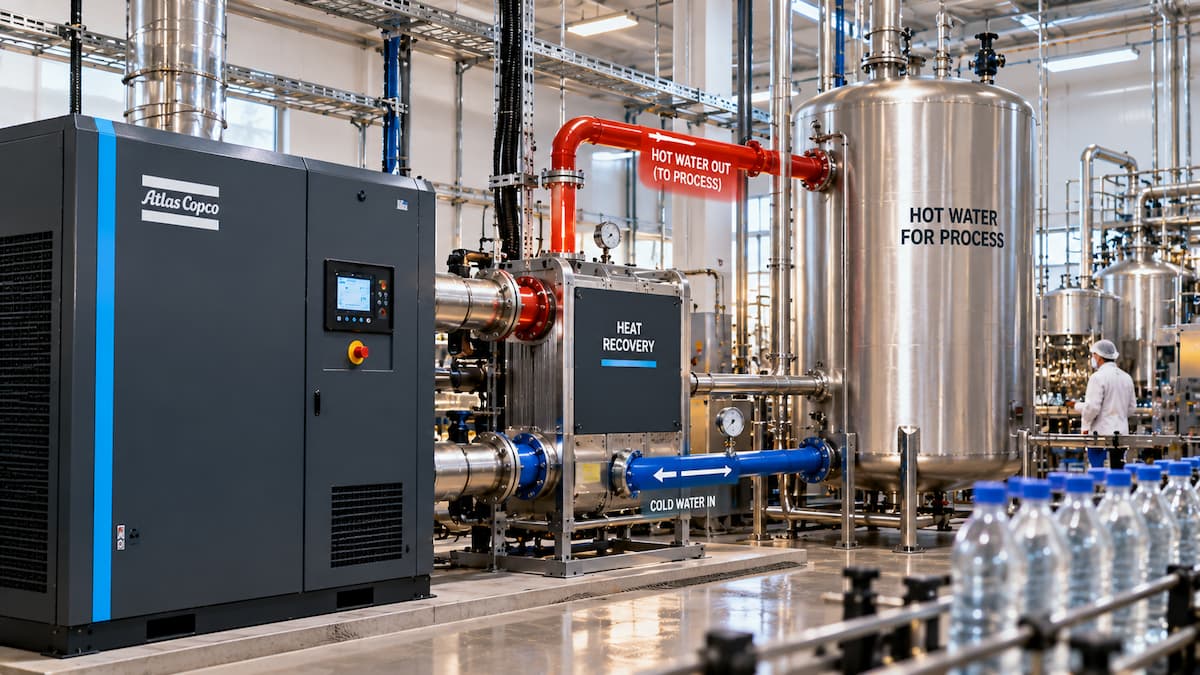
These components can affect the performance and energy efficiency of the complete system.
For example, a compressor may operate efficiently at the machine level, but significant air leaks in the distribution system can still increase overall energy consumption.
Similarly, operating at a higher pressure than necessary can increase energy requirements.
This is why the complete compressed air system should be evaluated before making a major equipment investment.
Air Treatment for Manufacturing Applications
Compressed air quality can be important depending on the production process.
Moisture, particles, oil, and other contaminants can affect equipment and production processes.
An air treatment system can include dryers and filters designed to achieve the required compressed air quality.
The correct combination depends on the application.
For example, a process that requires dry compressed air may need a suitable dryer. A sensitive manufacturing process may require additional filtration or oil-free compression.
Choosing these requirements before purchasing the compressor can help avoid expensive modifications later.
Service and Genuine Parts Matter
The purchase of an industrial compressor creates a long-term service requirement.
Maintenance, replacement parts, troubleshooting, and technical support can affect the total cost of owning the equipment.
Atlas Copco India provides compressor service and genuine parts through its service organization. The company also states that its service offering includes trained technicians, service plans, and genuine compressor parts.
Atlas Copco also offers service for compressors from other brands through its single-source service offering. According to Atlas Copco India, its technicians can service equipment from different manufacturers and source appropriate parts where available.
For a manufacturing facility, access to service support can be important because compressed air may be directly connected to production.
Atlas Copco's Service Network in India
Local service availability is an important consideration when selecting an industrial compressor.
Atlas Copco India lists sales and service offices in several Indian cities, including Ahmedabad, Bangalore, Chandigarh, Chennai, Gurgaon, Hyderabad, Kolkata, Mumbai, Pune, Thane, and Vadodara. It also lists authorized dealers across multiple Indian states.
This type of service network can make it easier for customers to contact the manufacturer or an authorized channel for sales, service, and technical support.
Manufacturers should still check the availability of service personnel and parts in their specific location before purchasing equipment.
Why Authorized Dealers Matter
The sales channel can also affect the ownership experience.
When purchasing an industrial compressor, buyers should verify whether the supplier is authorized to sell and support the equipment.
An authorized sales or service channel can provide access to manufacturer-backed information, genuine parts, technical support, and warranty processes where applicable.
Atlas Copco India provides information about its authorized dealer network and regional sales and service locations.
Buyers should confirm the supplier's authorization directly with the manufacturer rather than relying only on a seller's claims.
Reliability and Continuous Operation
Many manufacturing processes require compressed air for extended periods.
A compressor failure can therefore affect production if there is no suitable backup capacity.
Atlas Copco describes its rotary screw compressors as designed for continuous operation and offers models for different industrial applications.
However, compressor reliability depends on more than the brand.
Maintenance, operating conditions, correct sizing, air quality, cooling, lubrication, installation, and system design can all affect equipment performance.
A reliable compressor system should therefore include appropriate preventive maintenance and monitoring.
Choosing the Right Atlas Copco Air Compressor
There is no single Atlas Copco compressor that is suitable for every manufacturing facility.
The correct model depends on several technical requirements.
Before selecting a compressor, determine:
Air Flow
How much compressed air does the facility need?
Measure average and peak demand where possible.
Pressure
What pressure does the production equipment actually require?
Avoid selecting a compressor based only on the maximum pressure of the old machine.
Operating Hours
Does the compressor operate for a few hours each day or continuously?
Long operating hours make energy efficiency especially important.
Demand Pattern
Does air demand remain constant or fluctuate?
A variable speed compressor may be worth evaluating when demand changes significantly.
Air Quality
Does the production process require standard industrial air, dry air, or oil-free air?
The answer affects compressor and air treatment selection.
Future Production
Will the facility add new production lines or equipment?
Future demand should be considered when selecting compressor capacity.
Total Cost of Ownership
Compare not only the purchase price but also:
-
Electricity
-
Maintenance
-
Service
-
Parts
-
Air treatment
-
Installation
-
Downtime
-
Expected operating life
This provides a more complete picture of the investment.
Common Mistakes When Buying an Industrial Air Compressor
Choosing an established compressor brand does not remove the need for proper system planning.
Manufacturers should avoid several common mistakes.
Buying Based Only on Price
The lowest purchase price does not necessarily mean the lowest lifetime cost.
Energy and maintenance can represent significant long-term expenses.
Choosing the Same Size as the Existing Compressor
The old compressor may have been incorrectly sized or may no longer match current production requirements.
Measure current demand before selecting a replacement.
Ignoring Air Leaks
Leaks can increase compressor running time and energy consumption.
The compressed air distribution system should be checked before finalizing the compressor size.
Choosing Too Much Capacity
An oversized compressor can operate inefficiently under low demand.
Select capacity based on actual requirements and realistic future growth.
Ignoring Air Treatment
The compressor must provide air that is appropriate for the production process.
Dryers and filters may be required depending on the application.
Ignoring Maintenance Support
An industrial compressor is a long-term investment.
Consider service availability, spare parts, technical support, and maintenance requirements before purchasing.
Is an Atlas Copco Air Compressor Right for Your Factory?
Atlas Copco offers a broad range of industrial compressor technologies, but the right choice depends on the facility.
A pharmaceutical plant may have different air quality requirements from an automotive factory.
A textile mill may have a different demand pattern from a small engineering workshop.
A facility operating continuously may also have different efficiency requirements from a plant with intermittent production.
The best approach is to start with the application.
Measure air demand, pressure, operating hours, air quality requirements, and demand fluctuations. Then compare the available compressor technologies based on their expected performance and total cost of ownership.
Consider a Compressed Air Audit Before Buying
If you do not have accurate information about your existing compressed air system, an audit can provide useful data before purchasing new equipment.
An audit can help identify:
-
Actual air demand
-
Peak demand
-
Energy consumption
-
Pressure requirements
-
Load patterns
-
Air leaks
-
System inefficiencies
-
Compressor operating trends
This information can help determine whether you actually need a new compressor, additional capacity, a different compressor technology, or improvements to the existing system.
It can also help identify opportunities to reduce energy consumption before and after an upgrade.
Conclusion
Atlas Copco has a long history in compressor technology and offers a broad range of industrial air compressors and compressed air equipment in India.
Its current portfolio includes oil-injected screw compressors, VSD compressors, oil-free solutions, piston compressors, air treatment equipment, controls, and service solutions.
For Indian manufacturers, the decision to choose an Atlas Copco compressor should be based on the actual application rather than the brand name alone.
Air demand, operating pressure, air quality, running hours, demand fluctuations, energy consumption, maintenance, service support, and total cost of ownership should all be evaluated.
A properly sized and maintained compressor system can help a manufacturing facility meet its compressed air requirements while managing long-term operating costs.
If you are considering an Atlas Copco air compressor for a new installation or replacement, start by evaluating your current compressed air system. A data-based assessment can help identify the appropriate compressor technology and capacity for your facility.